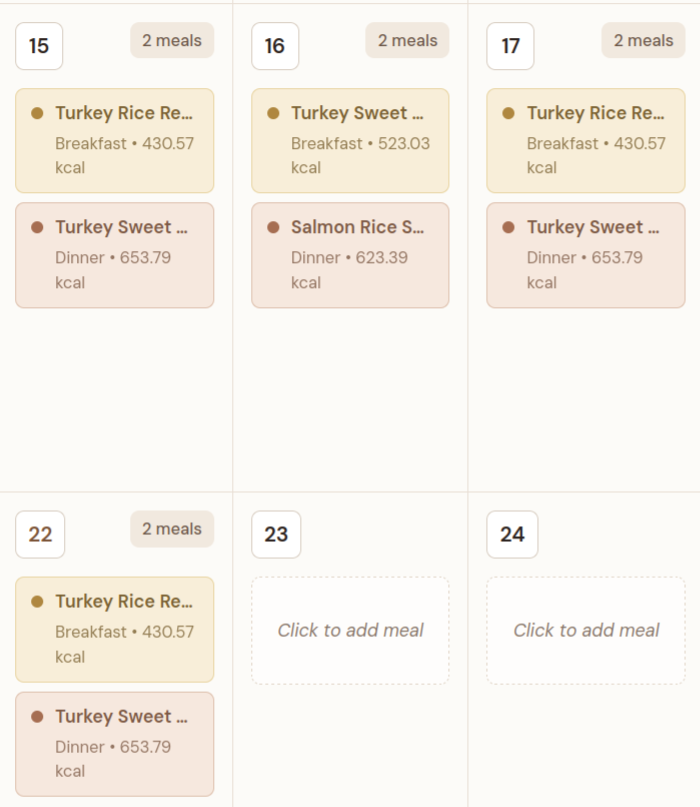
Meal planning calendar
See when a batch starts, which meals it covers, and when the next prep day is coming.
Batch cook once, portion clearly, and map servings to real dates so homemade feeding stays easier to repeat.
Most homemade dog food systems fail for practical reasons, not nutrition reasons. You cook a large batch, but then you still have to remember how many servings it made, how many meals it covers, when to thaw the next container, and when to cook again.
That is where a meal prep workflow matters. The goal is not just to cook more food. The goal is to make bulk cooking easier to repeat next week.
Pawprint Kitchen combines recipe building, batch sizing, portion math, and calendar scheduling so one prep session turns into an actual plan.
Meal planning calendar
See when a batch starts, which meals it covers, and when the next prep day is coming.
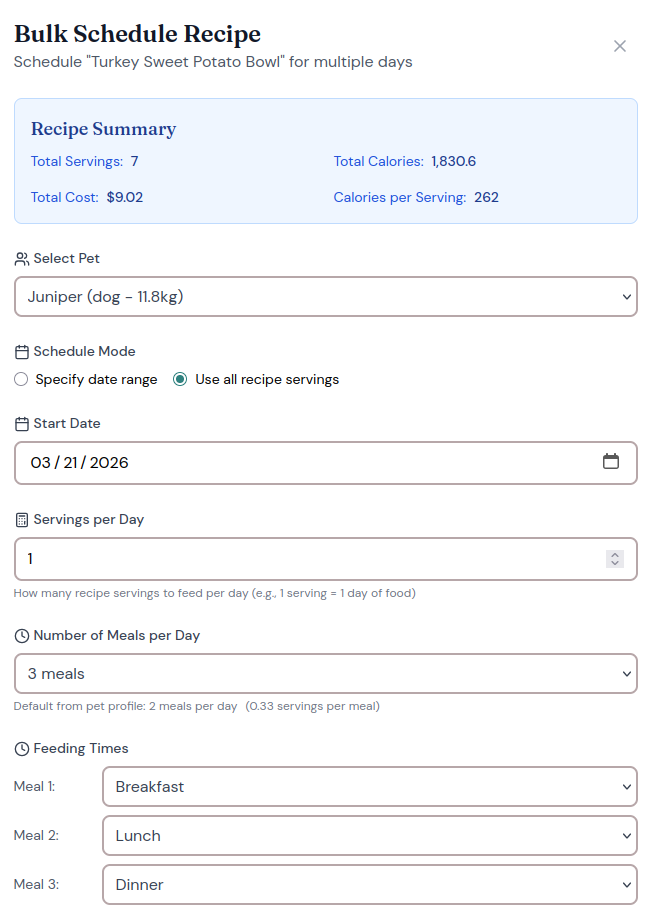
Bulk scheduling flow
Assign servings across multiple days before the finished containers even hit the freezer.
Create a repeatable homemade recipe and review calories before you cook.
Increase servings so one cook day covers several days or several dogs.
Split the finished batch into daily or meal-based containers you can track.
Map those servings onto future dates so you know when the batch runs out.
If you know a recipe needs to cover seven days instead of two, you can scale servings before shopping or cooking. That makes bulk prep more predictable and reduces last-minute math. If you want to run the full weekly version of that workflow, use the 1 week dog food meal prep guide.
Choose the schedule that matches how you feed. You can use every recipe serving automatically, or set a manual date range and decide how many servings to feed per day.
Some dogs eat once a day. Others need breakfast and dinner. Some homes are balancing multiple pets. Meal scheduling works better when you can match servings per day and number of meals to the routine you already follow. Use the feeding guide by weight first if you still need a calorie starting point.
Not every prep session needs to be a large cooker batch. Smaller amounts, especially for cat food or trial batches, can be easier to manage on the stovetop.
Texture matters too. If a pet prefers smoother food, blending or using an immersion blender after cooking can make the final mix much easier to serve consistently.
The easiest workflow is to buy core proteins in bulk, pre-portion raw ingredients into cooker-sized bins, batch cook one balanced recipe, and then label and schedule the finished portions before you need them.
Keep about three to five days in the fridge and freeze the rest. The important part is portioning clearly, labeling what is frozen, and thawing the next containers one to two days before you need them.
Scheduling helps turn one batch into a repeatable feeding plan. Instead of guessing how long a recipe lasts, you can map servings per day, start dates, and meal timing in advance.
Build the recipe, scale the batch, and schedule the servings so homemade feeding takes less mental overhead.