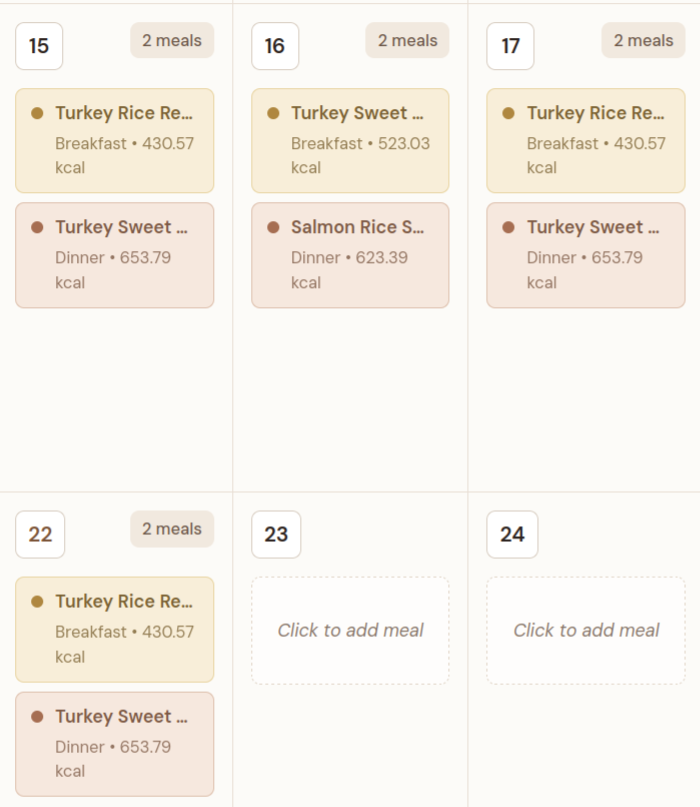
Meal calendar view
Frozen portions are easier to trust when they are tied to actual feeding dates instead of stacked as unlabeled backups.
Freeze in portions, label what matters, and use a schedule so the freezer actually reduces feeding friction.
Homemade dog food is much easier to manage when the freezer is part of the plan from the start. Instead of cooking random amounts and hoping it lasts, batch cooking works better when every container is tied to a known number of servings or days. That works best when you already have a repeatable meal prep system.
Pawprint Kitchen helps you connect recipe servings to actual meal dates, so freezing and scheduling work together instead of creating more guesswork.
Meal calendar view
Frozen portions are easier to trust when they are tied to actual feeding dates instead of stacked as unlabeled backups.
Scale a recipe intentionally so it covers more than a few days.
Split the food into daily containers or meal containers before it goes into storage.
Label portions so the oldest batch gets used first and nothing disappears into the back of the freezer.
Use your schedule to decide when each portion comes out and when the next batch is needed.
A container in the freezer does not tell you whether it covers one meal, one day, or three days. A schedule does. Once servings are attached to dates, your freezer inventory becomes easier to trust.
When the next portion is already tied to a future day, you are less likely to realize at bedtime that tomorrow's food is still frozen solid.
Freezing is supposed to save time. It only does that consistently when your prep session, your portioning, and your feeding calendar all point to the same plan. If you want the broader workflow, start with the full weekly prep routine.
Daily portions are usually easier to manage because each container covers a known amount of food. That makes thawing and scheduling simpler than freezing one large mixed batch, especially if the container is labeled with the ingredient mix and weight.
Label containers by recipe, ingredient mix, or weight, freeze them in order, and assign them to future feeding dates so the oldest portions get used first.
Scheduling shows when a frozen portion will be fed, which helps you plan thawing, track inventory, and avoid the common problem of running out without noticing.
Use batch recipes and meal planning together so your freezer supports homemade feeding instead of making it harder to track.